![Bioluminescent Glowing Forest Trail [Goa & Dodamarg]](https://konkantravelclub.com/wp-content/uploads/2025/05/Glowing-Mushroom-goa.png "Snakes of India: A Practical Guide to Understanding, Staying Safe & Appreciating Nature 2")
May 7, 2025/
No Comments
Step into the heart of Goa’s forests after dark and discover a world that glows. The Bioluminescent Forest Trail is...

We Plan, You Pack!
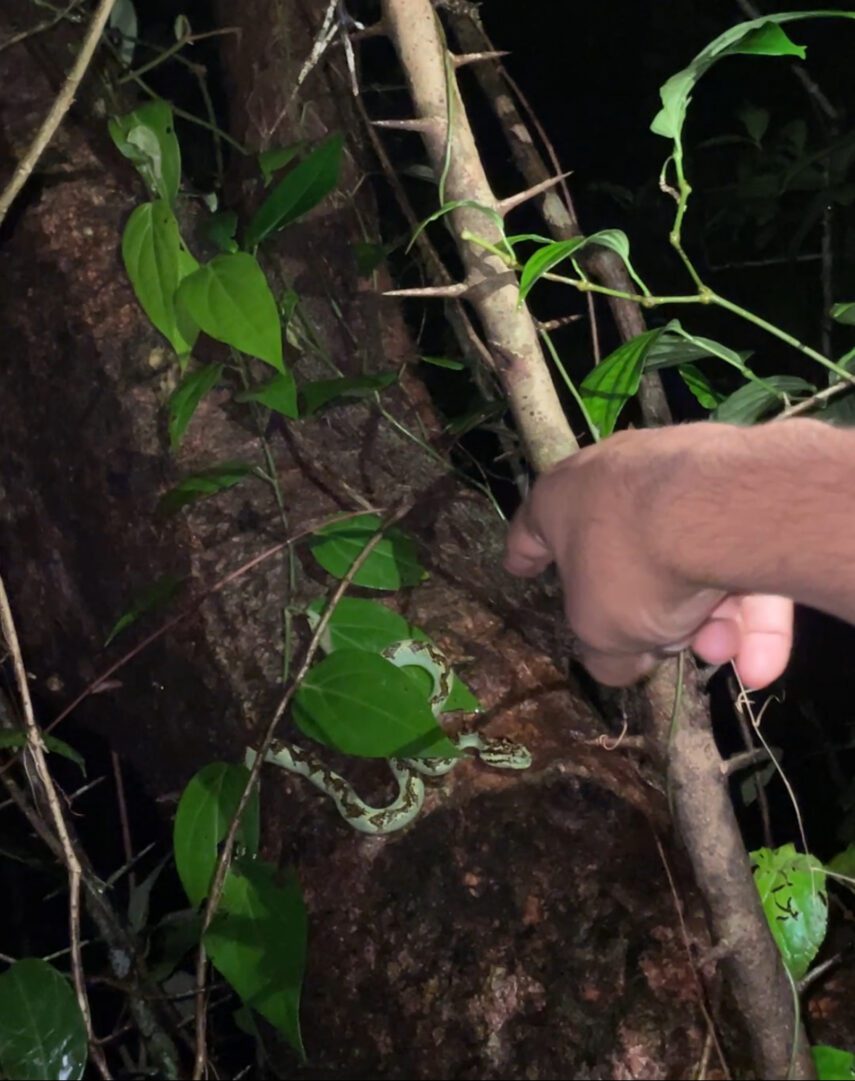
For many people, the thought of encountering a snake is enough to cause fear. Whether you’re trekking through the Western Ghats, camping in the Konkan, working on a farm, or simply exploring the outdoors, snakes are often seen as animals to avoid at all costs.
But here’s the reality: most snakes want nothing to do with us.
Like any wild animal, snakes are simply trying to survive. They hunt, avoid predators, find shelter, reproduce, and move through habitats that often overlap with ours. Understanding how they behave—and knowing how to respond if you encounter one—can make your time in nature both safer and far more rewarding.
This guide isn’t intended to make you fearless or turn you into a snake expert. Its purpose is to help you understand snakes well enough to make informed decisions, separate myths from facts, and appreciate the important role these remarkable reptiles play in our ecosystems.
Every healthy ecosystem depends on predators, and snakes are among the most effective.
Many species feed on rats and mice, helping control rodent populations that damage crops, contaminate food supplies, and spread disease. Others feed on frogs, fish, lizards, insects, bird eggs, or even other snakes. In turn, snakes themselves become prey for raptors, mongooses, monitor lizards and mammals.
Without snakes, ecosystems would quickly become unbalanced.
The next time you see a snake, remember that it isn’t an unwanted visitor in the forest—you are a visitor in its home.
No.
India has more than 300 species of snakes, but only a small percentage are capable of causing life-threatening bites.
It’s helpful to think of snakes in three groups.
These make up the majority of species you’re likely to encounter. They may bite if cornered, but they do not inject venom.
Examples include:
Rat Snake
Indian Rock Python
Checkered Keelback
Trinket Snake
Sand Boa
Some snakes possess venom to subdue their natural prey, but their bites are generally not considered medically significant in healthy adults. They may still cause pain or swelling and should never be handled carelessly.
These are species whose venom can cause severe illness or death if left untreated.
In India, most serious snakebite cases involve four species known as the Big Four:
Indian Cobra
Common Krait
Russell’s Viper
Saw-scaled Viper
Other medically important snakes include several pit vipers, sea snakes, coral snakes and the King Cobra, depending on where you are in the country.
The important takeaway is this: venomous does not always mean deadly—but every suspected venomous bite should be treated as a medical emergency.
The Indian Cobra is perhaps India’s most iconic snake. Its hood display has become a symbol of snakes across Asia.
Where it lives: Forests, agricultural fields, villages, wetlands and scrublands.
Behaviour: Cobras are generally shy. When threatened, they raise the front of their body and spread their hood as a warning. This is a defensive display intended to avoid conflict.
Venom: Neurotoxic, affecting the nervous system and breathing.
The Common Krait is one of India’s most medically significant snakes, largely because of its nocturnal habits.
Where it lives: Villages, farmland, scrubland and open countryside.
Behaviour: Secretive and active mostly at night. During the day it usually remains hidden beneath debris, rocks or in burrows.
Venom: Highly neurotoxic.
Many bites occur when people accidentally step on kraits in the dark or sleep on the floor where snakes seek warmth and shelter.
A heavy-bodied snake with bold oval markings, Russell’s Viper is widely distributed across India.
Where it lives: Grasslands, agricultural fields and open scrub.
Behaviour: Often relies on camouflage and remains still until disturbed. When threatened it produces a loud warning hiss.
Venom: Primarily affects blood clotting and internal organs.
Although small, the Saw-scaled Viper is responsible for many bites in dry regions of India.
Where it lives: Dry scrub, rocky terrain and semi-arid landscapes.
Behaviour: Produces a distinctive rasping sound by rubbing its scales together before striking.
Venom: Primarily affects blood clotting.
The Big Four receive most of the attention, but India is also home to several other venomous species.
These include:
King Cobra
Malabar Pit Viper
Bamboo Pit Viper
Hump-nosed Pit Viper
Coral Snakes
Sea Snakes
Most of these species are far less commonly encountered and usually avoid people whenever possible.
Ironically, many of the snakes people encounter during treks are completely harmless.
Some common examples include:
Rat Snake
Checkered Keelback
Buff-striped Keelback
Green Vine Snake
Common Bronzeback
Trinket Snake
Kukri Snake
Indian Rock Python
Sand Boa
Learning to recognize these species helps reduce unnecessary fear and prevents countless snakes from being killed simply because they resemble a venomous one.
One of the biggest myths about snakes is that they are aggressive.
In reality, snakes avoid confrontation whenever possible.
Their typical response to danger is:
Remain still and rely on camouflage.
Escape if given the opportunity.
Display warning behaviour.
Bite only if they feel trapped or threatened.
Warning behaviours vary by species.
A cobra spreads its hood.
A Russell’s Viper hisses loudly.
A Saw-scaled Viper rubs its scales together to produce a rasping sound.
These displays are not invitations to approach—they are warnings asking you to keep your distance.
Snakes don’t enter homes to find people.
They usually enter because they’re searching for:
Rodents
Frogs
Shelter
Cool, shaded places
Dry spaces during heavy rain
If a house has plenty of rats, food scraps or clutter, it becomes attractive not only to rodents but also to the snakes that hunt them.
Keeping surroundings clean and controlling rodent populations greatly reduces the chances of snake encounters.
The safest response is also the simplest.
✔ Stay calm.
✔ Stop moving towards it.
✔ Give it space.
✔ Allow it to move away naturally.
✔ Watch from a safe distance if you wish.
✔ If the snake is inside a building, contact a trained snake rescuer.
Remember: most snakes disappear on their own if left undisturbed.
Many snakebite incidents occur because people try to intervene.
Avoid these common mistakes:
✘ Don’t try to catch it.
✘ Don’t attempt to kill it.
✘ Don’t throw stones.
✘ Don’t poke it with sticks.
✘ Don’t try to identify it from close range.
✘ Don’t rely on social media videos for handling techniques.
Every snake deserves respect, whether venomous or not.
Simple precautions make outdoor adventures much safer.
Wear closed shoes or trekking boots.
Carry a torch after dark.
Stay on established trails.
Watch where you place your hands.
Avoid stepping over logs without looking beyond them.
Never place hands into rock crevices or hollow tree trunks.
Be extra cautious during the monsoon when snake activity increases.
Nature rewards observation, not haste.
Snakebite should always be treated as a medical emergency.
Stay calm.
Keep the bitten limb as still as possible.
Remove rings, watches or tight clothing if swelling develops.
Reach the nearest hospital immediately.
Cut the wound.
Suck out venom.
Apply chemicals or herbal remedies.
Use ice.
Apply a tight tourniquet.
Waste time trying to catch the snake.
Prompt medical treatment saves lives.
Fact: Most snake species in India are harmless.
Fact: Snakes usually move towards the nearest cover. This is often mistaken for chasing.
Fact: There is no scientific evidence that snakes recognize or seek revenge against people.
Fact: Snakes are carnivores and do not naturally drink milk.
Fact: Juvenile venomous snakes should be treated with the same caution as adults, but the popular explanation that they “cannot control their venom” is not supported by scientific evidence.
Most people remember the first snake they see in the wild. It is often an unforgettable experience—not because the animal was dangerous, but because it challenged the way they viewed nature.
The more time you spend outdoors, the more you realise that snakes are not lurking in search of people. They are simply another part of a healthy ecosystem, carrying out the same routines they have followed for millions of years.
Learning about snakes doesn’t remove the need for caution. It replaces panic with understanding.
And that’s perhaps the greatest lesson they have to offer.
The next time you walk through a forest, you may still keep an eye on the trail ahead—but you’ll also notice the fallen log that provides shelter, the stream that attracts frogs, the warm rock where a reptile might bask, and the countless connections that make a forest come alive.
Understanding snakes is not just about one group of animals. It’s about learning to appreciate the remarkable complexity of the natural world around us.
Step into the heart of Goa’s forests after dark and discover a world that glows. The Bioluminescent Forest Trail is...

Explore the hidden nocturnal wildlife of the Western Ghats on a guided Herping Night Trail in Amboli and Surla. Search...
“The first step in solving a problem is recognizing there is one” ~ Will McAvoy
Talk to us..